
First written for Hungry Eye Magazine:
Over the last few years it’s safe to say that there is no company making bad lenses or cameras. From Sigma to Canon to Nikon – there are some amazing new things coming out at a seeming weekly rate. Few brands have been doing – for me at least – what Fujifilm has been doing. The pairing of outstanding innovation and exceptional lenses wrapped up in retro, easy to use styling is just the ticket. Yes, it is safe to say I am a Fuji fan.
Over the last few years I have had the wonderful opportunity to build up a great relationship with the ‘Green’ team and I am very proud to be an ‘X-Photographer‘. During the time I have been shooting with the Fuji System there have been a number of updates and developments and just as another big firmware update arrives we look at the current line up of lenses to see where we are as the ‘glass’ stands.
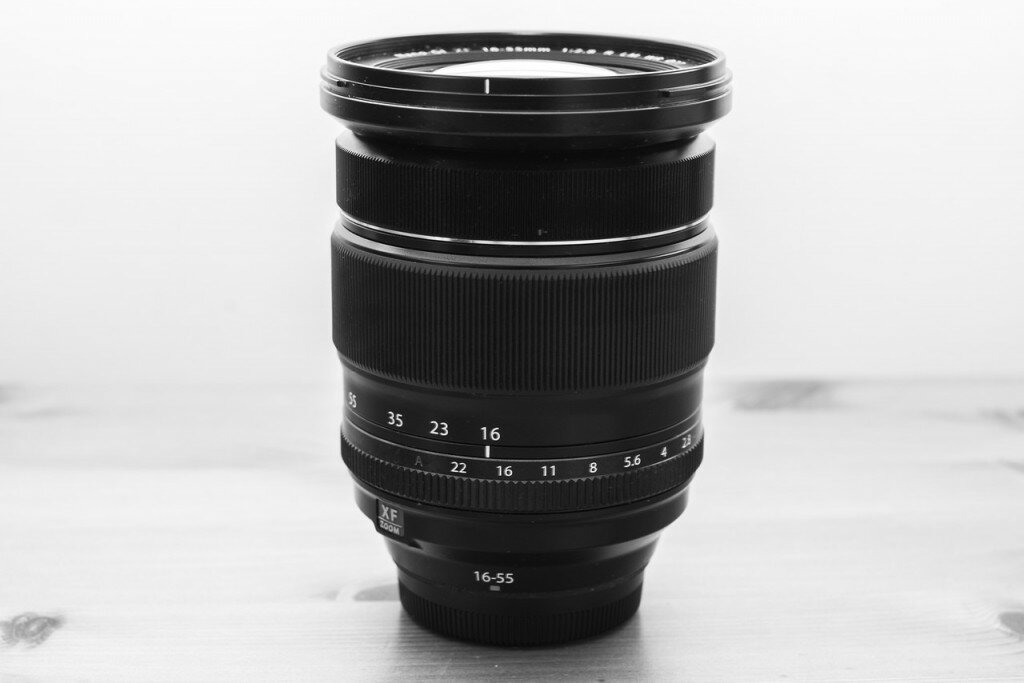
When the system was first announced , I started shooting with three main lenses, these were the 60mm, 35mm, and the 18mm. All fantastic things and still wonderful items to have, but, in 2015 my Peli case contains a few other slightly more exciting additions. The 60mm, 35mm and 18 all have something in common. They are small, light and built to be simple. Hard wearing and basic could be another way to put it. This is not saying they are not good, on the contrary, these are utterly wonderful lenses, but they are lacking in a few things which Fuji have addressed with the newer generation of lenses such as the 56mm APD. More than anything this shift towards an ‘even more’ acute sense of quality that seemingly is squeezing out every ounce detail from the X-Trans sensor is driven by demand. When people first started buying the X-series system, I am pretty sure they were not buying a camera to work on. This is the pre-switch from DSLR to CSC era. The X-T1 was a while away and X-Trans didn’t have phase detection. People ‘like me’ were using the cameras for two reasons. Firstly, they looked damn sexy. In contrast to my other DSLR’s they looked refreshing and something I wanted to use. Secondly they worked, they worked very well. They were small, light and gave us our hobbies back. They let us be ‘cool & hip’ taking photos, no longer did we have to use our iPhone. There was a middle ground. Not many ‘Pro’ photographers had second cameras as the choice was either a bridge camera, a compact camera or a film 35mm aside from the already mentioned iPhone. Fuji – among a few others I should mention, changed that and gave us the ‘pre minim’ compact that was so good people also started taking them to work as backup cameras, then they became additional cameras and now, with lenses like the XF16-55mm & XF50-140mm the DSLR is the back up.

In my eyes, looking at the roadmap for the Fuji XF lenses now, they are seeing that people want to work with these cameras. The new lenses are bigger, in everyday. The XF16-55mm has a massive 77mm filter fit which is almost as big as the X-T1. The XF90mm is beyond sharp in every way. The 50-140mm is so stable at the longer end while being fully internal and 2.8 constant. The new range of lenses are being designed with the professional photographers working needs in mind, in my mind this is departure from the first generation of Fuji lenses. Also, all the time, Fuji continue to give us free firmware updates to the cameras and lenses with the only exception being the tethering software having a charge.
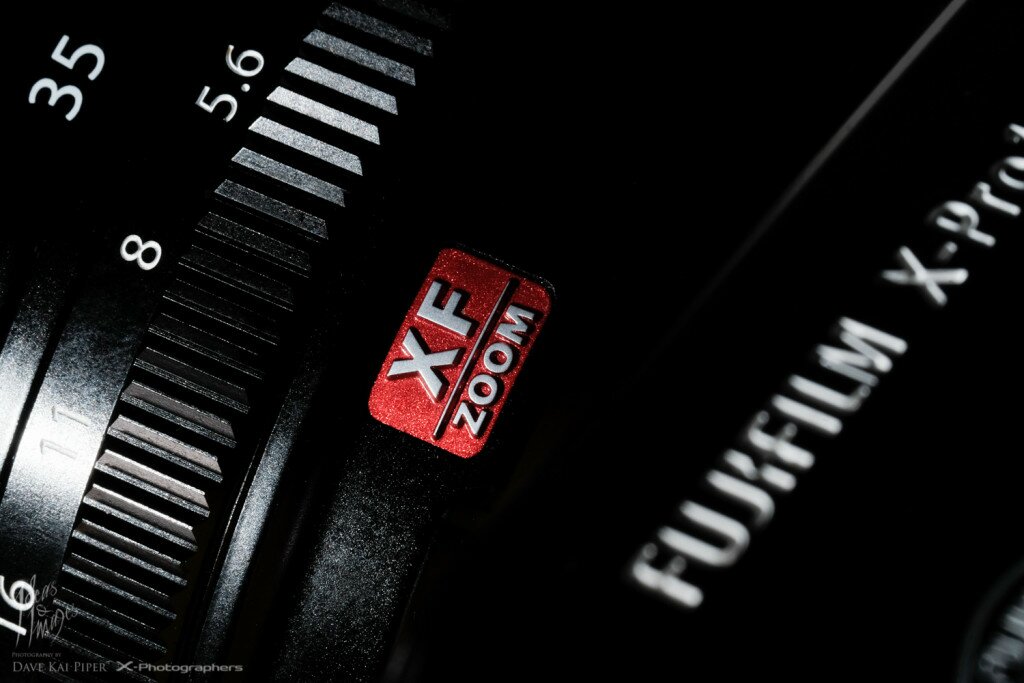
Portraits are my thing, I shoot people in a commercial and art based genre, thus my kit is set up this way. If you are shooting street photography or landscape you are just as well looked after with the new 16mm offering. If you are a wildlife photographer or need something longer, there is also good news as a massive XF100-400mm on the roadmap for 2016, but until then you still have the XF55-200mm or the slightly slower XC 50-230mm which offers f6.7 at the longest length. There is also a 1.4 tele-conveter expected at some point in 2015.
In short, the way Fuji are going seeming is as a response to the demand that people want to and actively are seeking to use the cameras in a more professional standing. From the working set up of lenses I have and work with at the moment, there is just the 120mm Macro on the roadmap that is the only thing that in my eye, would make the system complete. After that maybe an update to the X-Pro camera would be something I would like to see. But, the X-T1 has little wrong with it, after adding a arca mount plate and grip plus a purchase of SDHC II cards which the X-T1 can use (transfer speeds of 280mbs).
Quick overview of the new lenses:
Fuji 90mm f2 R LM WR XF Lens
Tack sharp and wonderful lens, great for longer portraits when you really want to explore low depth of field of low light conditions. Perfect portrait length or for getting that ‘down the aisle’ bride and groom shot when you have darker lighting conditions. Good weight and balance + large focus grip. So far I have only played with a pre-production model but this is an astonishing lens.

Fuji 56mm f1.2 APD XF Lens:
This is something new and little complex, in short, there are two versions, this version of the lens is basically optimized for shooting at f1.2. So … If you want low light over sharpness at f1.2 you want the normal lens, if you want sharpness over low light performance you want this lens. On the lens you will note two f-stop marks, one in orange and one in white, these are to show the difference equivalent f-stops with or without the APD filter. This lens is pretty much an f1.7 but hyper sharp version of the ‘R’ lens. ‘The FUJINON LENS XF56mm F1.2 R APD offers brilliant levels of sharpness even when shooting with the aperture at F1.2. In addition, the apodization filter smoothes the bokeh’s outlines. This combination of image sharpness and beautiful bokeh delivers portraits with a three-dimensional feel.’

Fujifilm 16-55mm F2.8 R LM WR
Of all the new lenses, this one is the most ‘all around’ and ‘go to lens’ of all the new lenses in my eyes. By far and away of the of the most versatile lenses Fujinon make and have made to date. If you are looking at buying into the system, this is very good lens to look at starting with if you are going to only have one lens, also, if you are a wedding photographer – this lens should be on your ‘must have’ list. Packed with all the Nano Gi coating, ED lenses, aspherical lens elements while Nine rounded aperture blades look after the blurry bokeh bits.

Fuji 50-140mm f2.8 WR OIS XF Lens
If the 16-55mm is the wide to mid ‘must have’ this is the f2.8 constant 70-200mm equivalent of the range. Sharp and clear edge to edge and though all the focal lengths. Packed full of all the latest and greatest tech Fuji could find such as nano Gi coating, LMO (corrects for diffraction), HT-EBC Coating ensures ghosting and flare are controlled, five ED lens elements and one Super ED lens, 23 glass elements in 16 groups then seven rounded aperture blades create a smooth, circular bokeh. The worlds first triple Linear Motor and a massive 5.0 stop stabliaztion. Oh… it’ the lens is weather-resistant, dust-resistant and will work in -10°C low-temperature too.

Here are a few links to help you find some of the stuff mentioned in this blog post, also remember to sign up for the newsletter which can be found here.
